




Africa's natural-capital platform.
Built one investable project at a time.
CBCC is building a scalable natural-capital platform across 7.48 million hectares of the Congo Basin — starting with targeted, high-integrity restoration projects and progressively expanding into forest protection, sustainable land use and landscape-scale conservation.
These figures represent the long-term programme opportunity, not the capital required on Day One. CBCC's investment strategy is to develop the landscape progressively through discrete, financeable project instances.
We are not financing seven million hectares upfront. We are financing the platform that can progressively unlock them.
Create the first high-integrity carbon-removal assets.
CBCC begins with carefully selected degraded and restoration-eligible areas where the company can establish clear baselines, implement restoration, develop nurseries, create local employment and demonstrate measurable carbon removals.
- Tangible project interventions
- Measurable carbon removals
- Strong environmental additionality
- Visible community impact
- Demonstrable implementation capability
- Lower complexity than developing the full landscape at once
The scale is the destination.
The project instances are the investment.
CBCC does not need to solve seven million hectares on Day One. The initial capital is deployed into targeted, measurable project instances designed to establish implementation capability, generate high-integrity carbon assets and create the infrastructure required to scale.
Each successful project strengthens the platform and creates the basis for the next.
Every project makes the next one easier.
CBCC's competitive advantage is not simply access to carbon credits. It is the progressive accumulation of reusable infrastructure and relationships.
Each successful project instance builds infrastructure, institutional knowledge and local relationships that can be reused across subsequent projects. As the platform matures, the marginal cost and implementation risk of developing additional project instances should decline.
Platform
The forest is the asset.
AI is the intelligence layer.
CBCC is designed to deploy advanced AI, Earth observation and geospatial intelligence across the natural-capital lifecycle — from identifying the first investable hectares to monitoring and managing projects at landscape scale.
From static project documents
to a living digital landscape.
Nature-based projects generate enormous volumes of spatial, environmental, operational and financial data. The opportunity is not simply to collect that data. It is to turn it into intelligence.
Why AI matters to CBCC
Identify and prioritise the most suitable areas for new project development.
Continuously analyse satellite, remote-sensing and field information.
Accelerate repetitive analytical and documentation workflows.
Identify anomalies, changes and areas requiring human investigation.
Support larger landscapes without analytical workload and headcount growing linearly.
Intelligence at every stage.
AI-powered project origination
The first question is not how to develop 500,000 hectares. It is: which hectares should be developed first?
AI for restoration
- — Restoration suitability
- — Land-cover classification
- — Historical vegetation analysis
- — Baseline development
- — Biomass modelling
- — Carbon-removal estimation
- — Monitoring
- — Project prioritisation
Outputs are AI-assisted, modelled, screened and prioritised — subject to field validation. AI does not independently establish certified carbon removals.
AI for forest protection
Detecting forest-cover change, new clearings, degradation, fire, road expansion, agricultural encroachment and other anomalies.
A living MRV system
AI does not replace field measurement or independent verification. It improves the ability to process, compare and continuously interrogate evidence.
From geospatial AI
to multimodal intelligence.
From AI assistants to AI agents.
The next generation of AI can move from answering questions toward executing structured workflows under human supervision.
Toward a digital twin of the landscape
Over time, CBCC can progressively build a digital representation of the landscape — combining ecological, carbon, operational, spatial and financial information into a continuously evolving intelligence system.
The more the platform develops, the more intelligent it can become.
Each project generates geospatial, field, carbon, restoration, monitoring, operational, community and economic data — progressively improving selection, modelling, monitoring, risk detection and capital allocation.
Structured project-specific data creates the potential for increasingly sophisticated proprietary intelligence over time. No proprietary AI moat is claimed today.
Advanced AI. Institutional controls.
Material outputs traceable to source data.
Critical decisions require qualified human review.
Models and datasets are versioned.
Material outputs subject to appropriate validation.
Source and processing history maintained.
Limitations and uncertainty documented.
AI never replaces FPIC or community decision-making.
AI does not replace the forester.
It gives the forester a much larger field of view.
Technology roadmap
- — AI-assisted geospatial analysis
- — Remote sensing
- — Project screening
- — Data integration
- — MRV support
- — Multimodal project intelligence
- — AI document workflows
- — Dynamic monitoring
- — Risk detection
- — Natural-capital analytics
- — AI agents
- — Landscape digital twin
- — Predictive modelling
- — Intelligent capital allocation
- — Cross-project learning
There is no separate technology funding ask. The same initial US$3M that establishes the first project instances also establishes the data, MRV and technology infrastructure required to make subsequent projects faster and more scalable.

CBCC will work with RAMO as a technical partner to support the deployment of advanced geospatial intelligence, AI-enabled land analysis and nature-based project development capabilities across the platform — drawing on RAMO's publicly described work in geospatial analytics, AI-enabled land scanning, remote sensing, machine learning and ARR / REDD screening.
- Landscape access
- Government relationships
- Communities
- Project development
- Capital
- Carbon market
- AI
- Geospatial intelligence
- Remote sensing
- Machine learning
- Project origination
- Nature-tech infrastructure
Complementarity, not dependency. RAMO is a technical partner; this does not imply ownership, exclusivity or full integration.
The platform does not
start from zero.
Government relationships, project documentation, operating infrastructure and GCF engagement are already in place. Phase 1 begins from an institutional foundation that has already been built.
CBCC has moved well beyond concept. Ministerial approval, a sovereign MoA, a completed PIN, an operational PMU, and GCF pre-approval give investors institutional-grade traction before the first VCU is issued.
CBCC passed GCF pre-screening under the Revised Accreditation Framework and has been formally invited to full Direct Access (non-governmental) accreditation. A catalytic grant proposal is submitted to fund the non-revenue-generating foundational elements: advanced MRV technology, capacity building, and legally binding Benefit Share Agreements.
Cleared GCF pre-screening under the Revised Accreditation Framework. Invited to full Direct Access accreditation. Catalytic grant proposal submitted for the $3.3M foundational phase.
Formal agreement of the Minister of Forest Economy authorising CBCC to develop the ER program in Cuvette and Cuvette-Ouest.
Memorandum of Agreement designates CBCC as official project carrier and carbon-credit commercialisation agency. Decree 2022-1923 established the Forest Carbon Task Force.
PIN elaborated and officially transmitted to the Ministry. Completed in national project tracking as of October 2024.
25-year financial model, economic structure, implementation modalities and operational assumptions finalised.
Program Management Unit (UGP) coordinating daily on-ground activities across Cuvette & Cuvette West.
From ministerial letter to GCF pre-approval.
May 26, 2021 — Minister of Forest Economy grants formal agreement for CBCC to develop the emission-reduction program.
October 2022 — Program Management Unit (UGP) created to coordinate daily on-ground activities and roadmap execution.
Business Plan finalised (Feb). PIN transmitted and confirmed (Apr). Sovereign MoA signed, designating CBCC as project carrier (Dec).
Currently executing final concession agreements, PDD finalisation, BSA/BSP signature and advanced MRV deployment.
Cleared GCF pre-screening under the Revised Accreditation Framework. PIN listed as completed in national project tracking (Oct).
- Advanced MRV technology — drones, GIS, LiDAR baselines
- Capacity building for ground teams and CLPA representatives
- Finalisation of legally binding Benefit Share Agreements (BSA)
- PDD final version and third-party validation pre-rating
- Marketing and working capital through first issuance
CBCC developed a draft FPIC standard tailored to the Republic of Congo to ensure local communities and indigenous peoples (CLPA) are true partners. The Benefit Sharing Plan (BSP/PPB) establishes:
The landscape we can
ultimately unlock.
The broader CBCC landscape represents the long-term opportunity. The investment strategy is to progressively bring selected areas into the platform through financeable project instances.
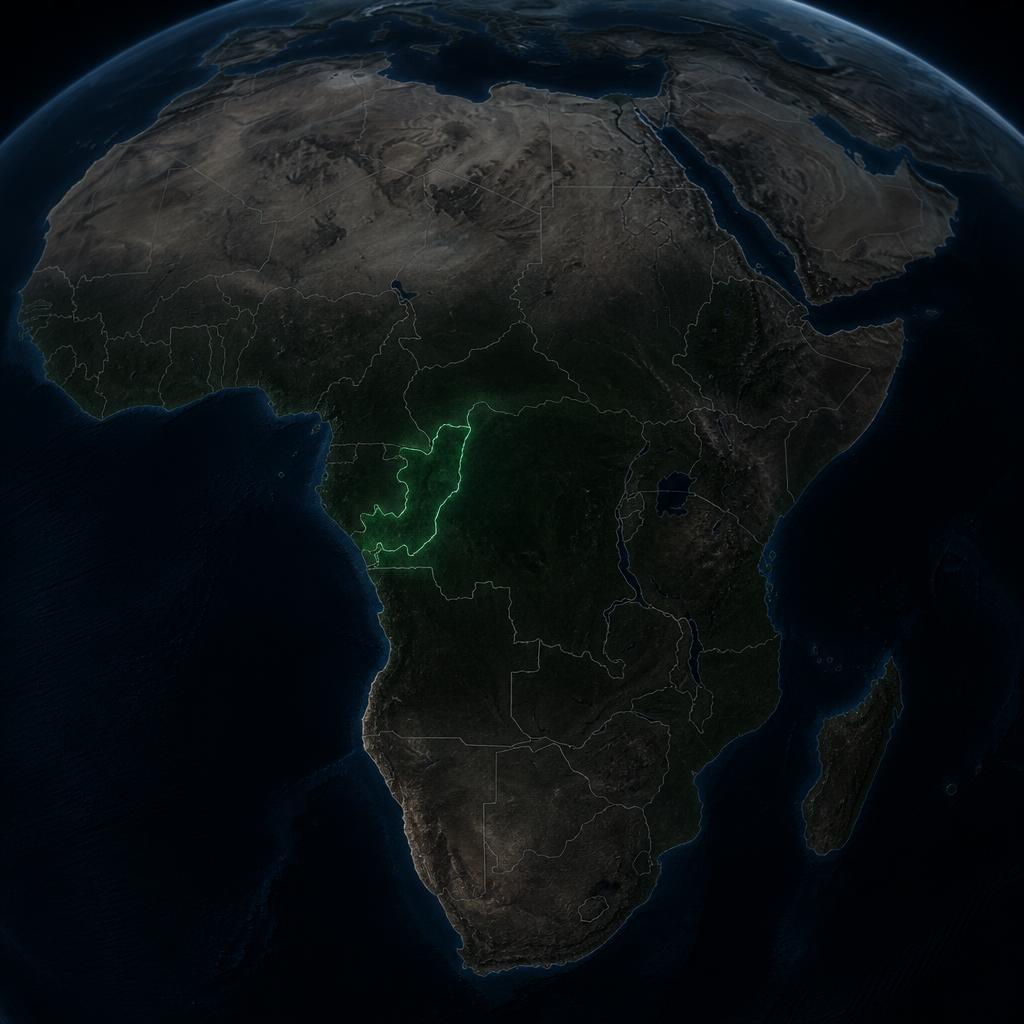
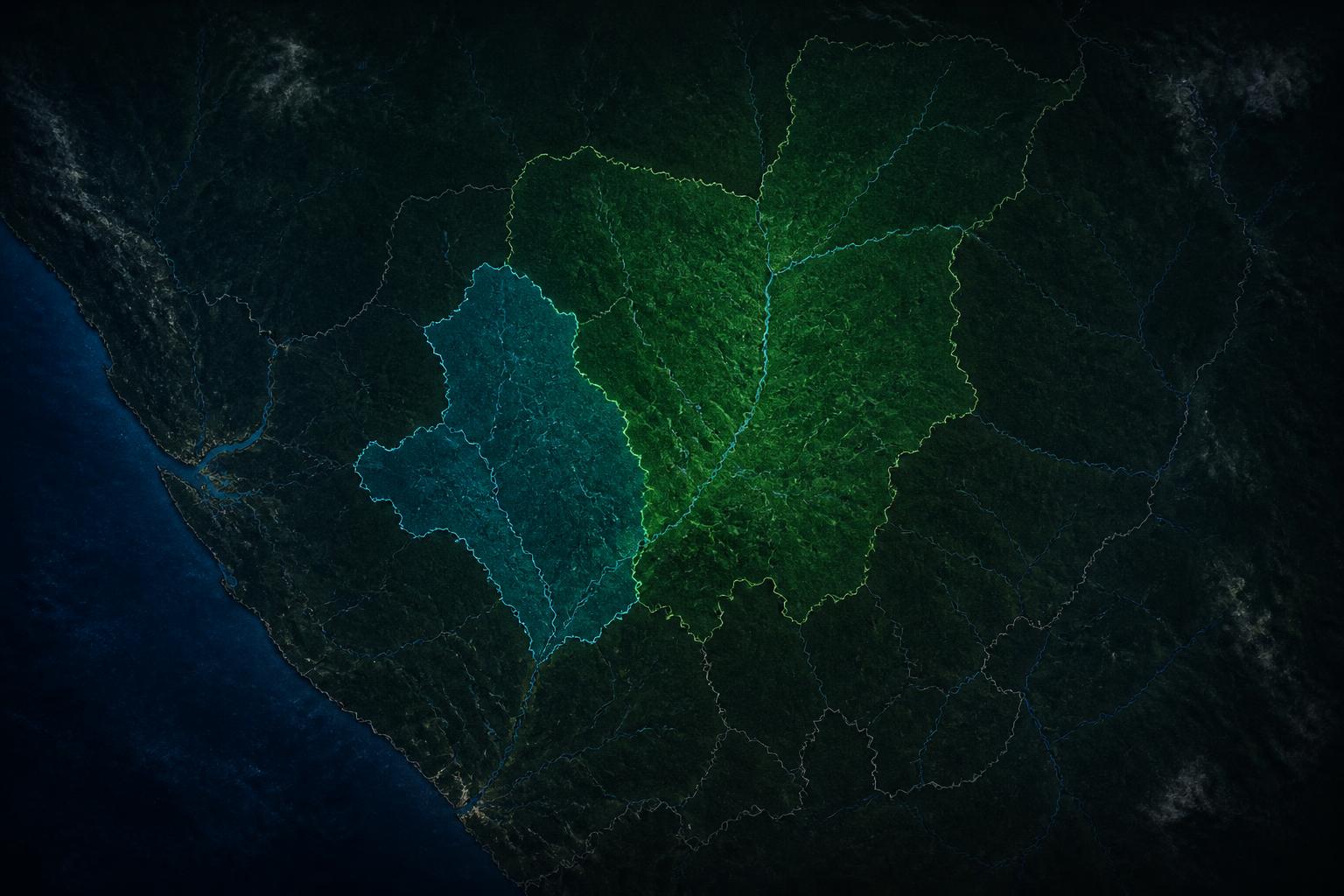
- Second-largest intact rainforest on Earth
- World's most carbon-dense peatland complex (~30 GtC)
- Critical habitat · Forest Elephants & Western Lowland Gorillas
- Sovereign concession secured · 25-year horizon
Two carbon engines. One integrated platform.
- — Restoration
- — Long-term biological sequestration
- — Forest protection
- — Avoided deforestation
Technical frameworks & governance
Methodology detail, FPIC and safeguards for diligence. Subject to validation.
- Cuvette concession · 3,881 kha
- Cuvette West concession · 3,145 kha
- Reduced Impact Logging (EFIR) protocol
- High Conservation Value forest protection
- Critical habitat · Forest Elephants & Western Lowland Gorillas
- VERRA/VCS + CCB Gold dual certification
Five gated stages of community consent.
Revenue is shared before it is spent.
The BSP/PPB locks in mandatory allocations for CLPAs and the sovereign royalty, then routes the balance to operations and reinvestment.
Technical integrity:
ER methodology and lifecycle issuance projections.
Every credit CBCC issues is calculated under Verra/VCS and CCB standards, then conservatively adjusted for leakage, uncertainty and a 15% Verra buffer pool. The result is a defensible, investment-grade issuance forecast of 132.2 million net VCUs across the 25-year lifecycle.
- ΔRE Reference
- Baseline emissions in the absence of project intervention.
- ΔRE Project
- Actual measured emissions during implementation.
- ΔLeakage
- Emissions displaced outside project boundaries — modeled at 5%.
- VM0010Improved Forest Management
- VM0015Avoided Unplanned Deforestation
- VM0047 / ARRAfforestation, Reforestation, Revegetation
- CCBClimate · Community · Biodiversity Standard
Mandatory deduction into the Verra pooled buffer account — insuring the portfolio against reversal risk across the lifecycle.
If measurement uncertainty exceeds the threshold, a direct deduction is applied to final issuance — ensuring conservative, audit-ready results.
From gross baseline to net issued VCUs
Ramp-up to steady-state by Year 6
Where the credits come from
18 months from
Phase 1 first credits.
CBCC is in Stage 4 of a 6-stage Verra-aligned development pipeline. First Phase 1 credits expected within ~18 months. Long-term, the overall project is estimated at 3–4 million VCUs per year.
Continuous satellite + LiDAR baseline. Sub-hectare deforestation alerts.
Forest guards, MRV technicians, community liaison officers. Living wage indexed.
Dual registry. Annual third-party audits. Public dashboard.
Why now: the flight to quality.
The next generation of carbon investment is moving away from undifferentiated volume and toward projects combining measurable climate impact, strong governance, biodiversity and durable community outcomes. CBCC is designed for that market.
MSCI forecasts (scenario) project voluntary carbon demand outpacing registered supply by a factor of 3.4× by 2050 — requiring $1 trillion in additional capital to catalyze institutional-grade supply.
Regulatory Hedge
EU CBAM, SEC climate disclosures and Article 6.2 alignment are converging. Tier-1 buyers must lock long-dated ITMO-eligible supply before pricing dislocates.
Soil-Carbon Moat
The Cuvette Peatland Complex stores ~30 GtC — the densest tropical carbon stock on Earth. Avoidance here is scientifically irreplaceable.
Flight to Quality
MSCI projects a market bifurcation post-2027: low-integrity credits collapse, premium jurisdictional REDD+ trades at $40–80/t with 15% Verra buffer protection.
One slider. The entire
25-year revenue split.
Carbon finance with development impact.
Impact is not an add-on to the investment case — it is what makes the carbon assets durable. Community economics reduce leakage; protected habitat underpins permanence.
capital
Built by operators.
Not promoters.
Forestry, frontier-market private equity, structured finance and energy infrastructure — a leadership team that has already executed at scale across Sub-Saharan Africa.
Forestry background. Former West African trade lead at Dalhoff Larsen & Horneman (peak: world's largest timber company). Operated concessions across RoC and Gabon.
15+ yrs PE & investment. Led $1Bn+ M&A across frontier Africa. Founder of ZeroPact (Wired Top 100 EU Startups), a certified emissions intelligence engine.
FCCA & Chartered Agricultural Engineer. Tier-1 finance roles at Barclays, Siemens, Michelin. Currently CFO Solgenics. Prior: 8+ yrs Atlantic Rainforest conservation, São Paulo.
35+ yrs in African ports & logistics. Led Vale's coal terminal at Beira and Nacala corridor. Leading battery minerals ventures across Mozambique.
Founder of Captive Power (SA). Co-founder of GridX Africa. Solar development across Sub-Saharan Africa. Prior: QKR Corporation (Navachab Gold), Patersons Securities ASX IPOs.
Finance & sustainability professional, Cape Town. Co-Founder of Captive Carbon and Business Development at Captive Power. Former Managing Director of 2Help1 Group. Investment Manager at Investec; earlier NAV Calculations Specialist at J.P. Morgan. BBusSci Accounting & Finance, University of Cape Town.
Five reasons to invest now.
A potential 7.48M-hectare natural-capital platform in the Congo Basin.
Government engagement, sovereign MoA, project documentation, PMU and GCF engagement already established.
The platform can be developed progressively rather than requiring full landscape financing upfront.
ARR removals + AUD emission reductions + sustainable land use + future methodologies.
Carbon finance becomes the mechanism for restoration, biodiversity protection and community-led economic development.
Capital to launch the platform.
US$3M
for 15% equity.
The US$3M equity bridge funds the first investable project instances and the infrastructure required to validate, finance and replicate CBCC's model. It is not a request to finance the full landscape upfront. The broader foundational phase is budgeted at $3.3M and is the subject of a catalytic GCF grant proposal. This $3M equity bridge unlocks PDD finalisation, BSP execution, ground capacity and pre-rating. 18 months to first Phase 1 credits; 3–4M VCUs per year is the long-term estimate for the overall project.
- PDD Final Version24%
- BSA · BSP · Final MoA22%
- Advanced MRV Tech18%
- Pre-Rating Exercise14%
- Ground Capacity Building12%
- Marketing & Working Capital10%
Take CBCC into the investment committee.
Download the institutional investment brief — a concise, investment-grade overview of the CBCC platform, development pathway, economics, governance and investment opportunity.
From the first hectare
to 7.48 million.
This is not a single carbon project.
It is a platform for African natural capital.
The opportunity is too large to finance all at once.
That is precisely why CBCC is being built in stages.
Join the first stage.
CBCC is opening the next stage of its development to strategic and financial investors seeking exposure to high-integrity African natural capital. The first US$3M of equity is designed to establish the initial project instances, complete critical development work and create the foundation for subsequent scale.
We are not asking investors to bet on a 7-million-hectare project. We are asking them to invest in the platform that can build it.